Weezer - Island In The Sun (Spike Jonze Version)
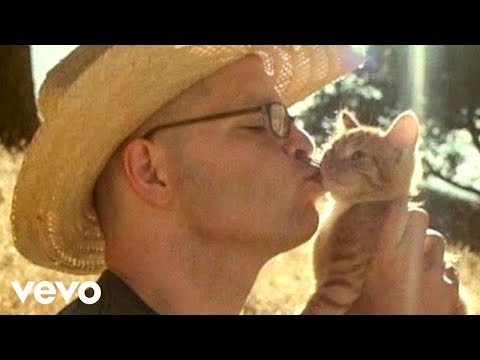
What this video is
Released in September 2001 as the second music video for Weezer's 'Island in the Sun' — itself the second single from the Green Album — this Spike Jonze-directed clip arrived at a pivotal moment in the band's commercial trajectory and in the broader culture of MTV-era alternative rock. The video exists as a direct product of MTV's editorial gatekeeping: the first version (directed by Marcos Siega) was rejected by network executives, leading the band to commission Jonze — already a trusted creative collaborator from the 'Buddy Holly' and 'Undone' era — for a second attempt. The resulting video, with its sun-drenched California hillside and band-plus-wild-animals premise, became the canonical visual for one of Weezer's most enduring and widely licensed songs. The naturalistic, low-concept aesthetic stands as a counter-statement to the era's increasingly elaborate or effects-heavy video productions, embodying Jonze's signature tendency to locate sincerity and charm in simplicity.
Why it matters
Represents a high-water mark of early-2000s power-pop/alt-rock music video production, illustrating how auteur directors like Spike Jonze brought a filmmaker's sensibility to the format. The video's concept-over-spectacle approach — animals, sunshine, and unaffected performance — became an influential template for 'naturalistic' band videos in the subsequent decade. The song itself is the most-licensed track in Weezer's catalog, cementing this video as a durable cultural artifact of the era.
The director
Born Adam Spiegel on October 22, 1969; known professionally as Spike Jonze. American director of music videos, commercials, and feature films. Began career photographing skateboarders and BMX riders. Directed landmark music videos for Weezer ('Buddy Holly', 'Undone – The Sweater Song', 'Island in the Sun'), Beastie Boys ('Sabotage'), Daft Punk, Björk, and others. Feature debut Being John Malkovich (1999) earned an Academy Award nomination for Best Director. Co-founded Directors Label DVD series in 2003.
Look and style
Fashion: thick-framed glasses (Rivers Cuomo nerd-chic signifier), casual t-shirts and jeans — anti-fashion alt-rock uniform, understated earth-tone clothing palette, no-logo, no-brand everyday wear.
Techniques: single-location open-air shoot, documentary-style observational framing, non-choreographed band-and-animal interaction, minimal post-production treatment, naturalistic color palette — no heavy telecine or color grade evident, tight shot/reverse shot editing rhythm matching song's melodic cadence.
Effects: natural location lighting (no artificial fill apparent), handheld or loosely stabilized camera movement, warm practical sunlight color grading, close-up animal interaction inserts, fast intercutting between band performance and animal vignettes.
Scenes and audiences: power-pop nerd-rock aesthetic, suburban California indie sensibility, MTV TRL-era alternative rock fan culture, DIY / naturalistic anti-spectacle video ethos.