Metallica: Enter Sandman - Metallica: Enter Sandman
What this video is
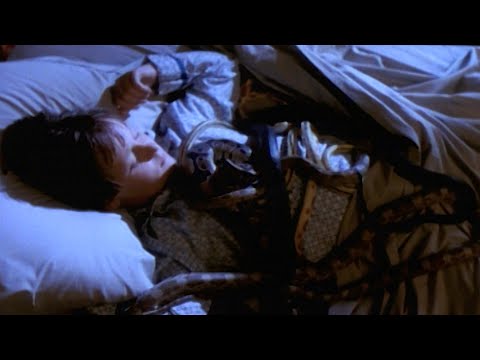
Released July 30, 1991, two weeks before Metallica's self-titled 'Black Album,' the 'Enter Sandman' video marked a pivotal moment in heavy metal's commercial history — the band's deliberate pivot toward MTV accessibility after years of rejecting the medium. Producer Bob Rock noted the band had not yet broken through to mainstream radio. The video's nightmare imagery (child drowning, falling from buildings, snake encounters, truck chase) literalized the song's lullaby-horror theme. The strobe-cut performance aesthetic became a signature of early-1990s hard rock video grammar. Its MTV premiere signaled the format's continued capacity to break rock acts to mass audiences just as grunge was beginning to gather cultural momentum.
Why it matters
Canonically significant as the video that completed Metallica's mainstream crossover, demonstrating that heavy metal could achieve Top 20 chart placement and heavy MTV rotation without abandoning sonic or visual aggression. The rapid-cut strobe aesthetic set a template for subsequent hard rock and nu-metal video production throughout the 1990s. MTV VMA win for Best Hard Rock Video (1992) certified its genre benchmark status.
The director
Wayne Isham (b. December 2, 1958, Vinita, Oklahoma) is an American music video and film director. A UC Santa Barbara alumnus, he cited David Bowie's 'Ashes to Ashes' as his career inspiration. By the early 1990s he was a leading director for arena rock acts including Bon Jovi, Mötley Crüe, Def Leppard, and Metallica. Awards include a Latin Grammy (2001), MVPA Lifetime Achievement Award (2007), and MTV VMAs for Britney Spears' 'Piece of Me' (2008).
Look and style
Fashion: all-black wardrobe, long hair (band members), dark denim, minimal-accessory metal aesthetic, absence of glam excess — stripped-down anti-hair-metal look.
Techniques: 35mm film with video transfer grain, low-key chiaroscuro lighting, soundstage darkness construction, intercutting performance with nightmare vignettes, match-on-action editing for rhythmic synchronization, extreme close-up instrument shots, handheld-style camera movement.
Effects: strobe-light flash cuts, rapid intercutting between performance and narrative, continuous picture flicker effect throughout, high-contrast silhouette lighting, sepia-warm tonal grade, nightmare montage sequencing, shadow-dominant set design.
Scenes and audiences: heavy-metal-fandom, arena-rock-culture, nightmare-gothic-imagery, early-90s-MTV-hard-rock-bloc.